
ARMAGEDDON (English)
What if the biblical story of the Israelites had never been confirmed by archaeology?

In order to fully grasp the subtleties of this article, it is essential to consider that:
The books of Joshua, Judges, Samuel, Kings, Chronicles, Jeremiah, Genesis (Torah), Exodus (Torah), and Deuteronomy (Torah) come from the Old Testament.
The book of Revelation and the Gospel according to Matthew come from the New Testament.
The Hebrew Bible (also called Tanakh) consists of the Old Testament and some related texts.
The Christian Bible consists of the Old Testament and the New Testament.
In all the sacred texts listed to date, the term “Armageddon” appears only once. It appears in the book of Revelation, written by John of Patmos towards the end of the first century of the Christian era. “Armageddon” translates from the Greek as “mountain of Megiddo” or “Tel Megiddo” in Hebrew, and refers to the place where, according to the prophet’s vision, a decisive battle is to oppose the kingdom of God to the evil spirits of the kings of the earth. In the aftermath of a whirlwind of plagues strangely reminiscent of the plagues of the Exodus, God finally triumphs and frees humanity from the grip of the Beast.
“For they are the spirits of devils, working miracles, which go forth unto the kings of the earth and of the whole world, to gather them to the battle of that great day of God Almighty. (…) And he gathered them together into a place called in the Hebrew tongue Armageddon.” – Revelation 16:14-16
To my surprise, Tel Megiddo is a very real geographical location located in the Jezreel Valley – a territory currently occupied by Israel. Although archaeological excavations on this ruined field have shown that a prosperous and influential city-state once stood there, at the crossroads of the trade routes connecting Egypt, Mesopotamia, and the port cities of the Canaanite coast (modern-day Lebanon), we know little about its history outside of the texts of the Hebrew Bible an from a story engraved on the walls of an Egyptian temple and some diplomatic letters.
I have confused these sources in the hope of understanding the reason that led the author of the Apocalypse to name this city in such a particular context. My expectations of finding a semantic, theological, symbolic or metaphysical explanation in them very quickly fell into disuse because of the poverty of their content. I did discover information that would call into question the validity of the historical account of the people of Israel, as presented in the Bible.
According to the hieroglyphics of the Temple of Amun at Karnak, Egypt, King Thutmose III (“pharaoh” being a Greek term of the 4th century BC to use it in this case would be an anachronism; the appropriate term is “king”) conquered the city of Megiddo following a great military campaign against a coalition of Canaanite forces around the 15th century BC. This tribute would have gone unnoticed if the book of Joshua and the book of Judges, in which it is written that the Israelites occupied Megiddo after the Exodus, did not corroborate the chronology put forward in verse 6:1 of the first book of Kings: “In the four hundred and eightieth[a] year after the Israelites came out of Egypt, in the fourth year of Solomon’s reign over Israel, in the month of Ziv, the second month, he began to build the temple of the Lord.”
Indeed, the work of the eminent professor Edwin R. Thiele on the Hebrew Bible has shown that the reign of King Solomon began around 970 BC. However, by adding this duration to the 480 years mentioned in the verse above, we obtain a date of 1450 BC for the Exodus. And since the region remained under the domination of the Egyptian Empire (New Kingdom) between the 15th and 10th centuries BC, it is difficult to believe that a people could have taken refuge in a territory dominated by the power from which it sought to emancipate itself.
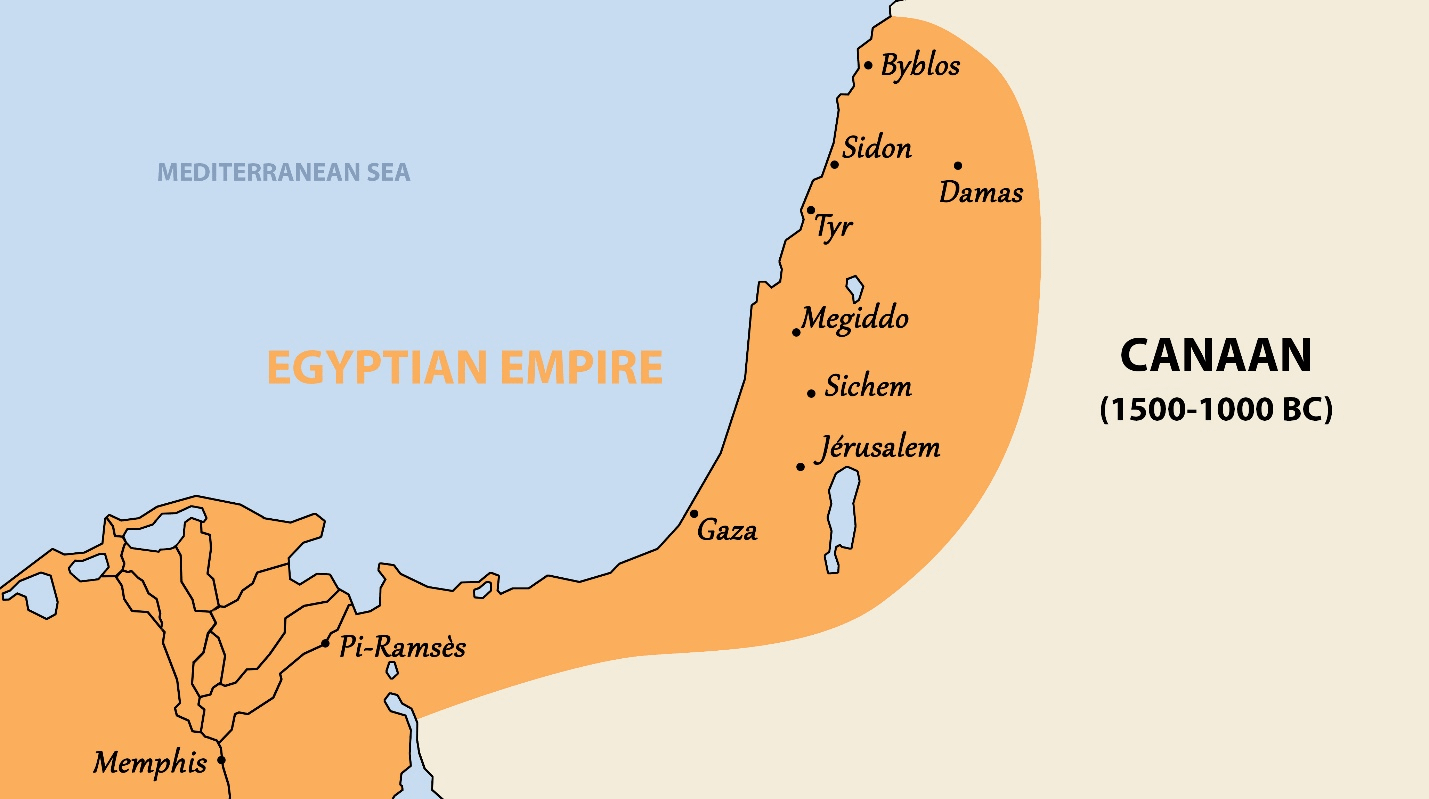
Even more troubling, despite the many sources available, we find no explicit reference to the importance of a chosen people of God in the history of the Egyptian Empire, or even to Kings David and Solomon, even though they are reputed to be very famous...
For example, the diplomatic letters of Amarna, written at the end of the 14th century BC between the Egyptian kings Amenhotep III, then Amenhotep IV, and their vassals residing in the Canaanite cities of Hazor, Megiddo, Gezer, Ashkelon, and Jerusalem, make no mention of the Hebrews or Israelites. This blithely contradicts the version of Exodus and Deuteronomy, texts that never cease to apologise for the domination of the kingdom of Israel over the region during this period.
The only archaeological trace of Israel is found on the stele of Merenptah, written in hieroglyphics and dating from the year 1208 BC, on which is transmitted to posterity the account of the military campaigns of King Merenptah (successor of Ramesses II) in the land of Canaan. On this granite stone, “Israel” is used anecdotally to describe a group of people whose revolt was easily contained.
This confirms the abysmal absence of archaeological discoveries tending to corroborate the biblical account. How can we explain that the presence of Egyptians is attested in the region by the exhumation of a statue of Ramses VI on the site of Megiddo, when no one has yet found concrete evidence of the existence of a temple of Solomon? If the kingdom of Israel, and later that of Judah, had been exceptionally rich and animated by such an original culture, why do we find no trace of it, no artifact? Compared to the cathedrals that flourished throughout Europe over a period of about two centuries, isn’t it saying that a so-called “God’s chosen people” did not build more than one temple to pay homage to this incredible blessing over more than two millennia?
Answering these questions is simple: the entire mythology of the Israelites is based exclusively on writings. And since the latter were easily manipulated, both before and during the first Venetian impressions, there is no doubt that the numerous chronological, geographical, ethnological and theological inconsistencies reflect the falsifications that have accumulated over the course of the psychological, political or religious operations of history. These conclusions are confirmed by verses 8:8-9 of the book of Jeremiah (a major prophet in the Hebrew Bible): “‘How can you say, “We are wise, for we have the law of the Lord”, when actually the lying pen of the scribes has handled it falsely? The wise will be put to shame; they will be dismayed and trapped. Since they have rejected the word of the Lord, what kind of wisdom do they have?”
In full knowledge of the facts, the existence of the people of Israel during antiquity looks more like a learned fiction than an authentic historical testimony.
It is essential to add that “Israel” has never been the name of any particular land, let alone a territory promised by anyone. “Israel” is the name given to Jacob when he received divine initiation, as recorded in verse 32:28 of Genesis: “And He said, “Your name shall no longer be called Jacob, but [i]Israel; for you have struggled with God and with men, and have prevailed.”According to linguists, “Israel” means “may El reign” or “may El be master.” Since El was the universal God of Abraham and the biblical patriarchs (“Helios”, the sun god of the ancient Greeks has El as its etymological root), these translations confirm the revelations of the previous paragraph. From the theological point of view, it should be noted that El was above all the master of time in the Phoenician pantheon, because of his privileged relationship with the heavens, with the celestial vault. A holy and inspired spirit will grasp the necessary connection to the God of the New Testament, whom Matthew’s Gospel claims in verse 6:9-10: “Our Father in heaven, allowed be Your name. Your kingdom come. Your will be done. On earth as it is in heaven.”
Even if a kingdom of Israel or Judah existed, its territories and Yahweh’s influence never went beyond the periphery of the cities of Samaria, Shechem, Jerusalem, Megiddo, or Hebron. These “kingdoms” never reached the Canaanite coast in the so-called time of their heyday, as we would have us believe. Simply because, since the fall of the Egyptian Empire, the Philistines, the Phoenicians, the Babylonians and the Achaemenids kept control of it until the conquests of Alexander the Great in the 4th century BC. This is why the unified monarchy of an Israelite people has never existed outside of the accounts of the book of Samuel and the first book of Kings.
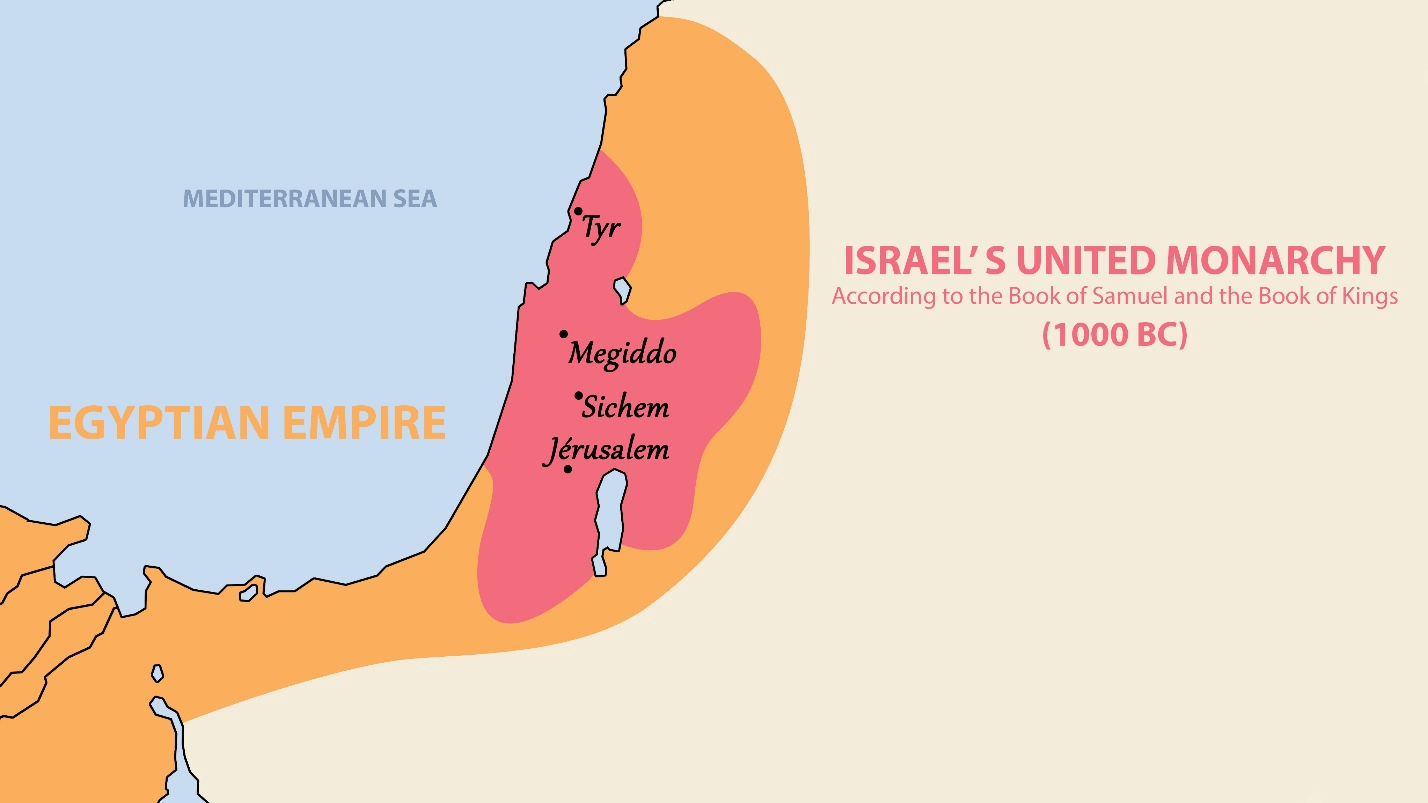
That said, my intention is not to denigrate the beliefs of my fellow man. I am just a simple researcher in search of truth, no matter how radical it may be. Unfortunately for the salvation of humanity, not everyone is animated by the same intellectual honesty; There are lost souls who never hesitate to lie in order to impose their domination over others. And since religion has few equals in the power of enslavement, a founding text is a formidable catalyst: the more established its antiquity, the more legitimacy it acquires.
To fully understand the situation, it is therefore important to realize that there is no version of the Hebrew Bible written by Moses. The Tanakh – in its most accomplished form – was fixed by the Masoretes more than two millennia after the Exodus, between the 9th and 8th centuries of our era, to be precise. Even if I recognize the validity of the oral tradition, I have great difficulty in consenting to the authenticity of these texts: remembering so many details would require a transmission through space and time that seems very pretentious to me.
This opinion even resists the fragments of manuscripts written in Hebrew, Aramaic and Greek (to a lesser extent), discovered in 1947 in a West Bank cave at Qumran, because the synchronicity of this ‘archaeological miracle’ with the creation of the State of Israel in the region is, in my opinion, a very bad omen.
Until proven otherwise, the Codex Sinaiticus and the Codex Vaticanus are the oldest complete versions of the Bible listed to date. They are written in Greek and date from the 4th century of the Christian era. It is partly on these manuscripts that the modern Septuagint was formed. We are talking about the modern version, because there would have existed, at the time of Hellenistic Egypt, a translation into Greek made from Hebrew texts. Again, although there is no physical evidence to attest to the archaeological existence of these intermediate manuscripts, we have no choice but to rely on the authorities in this matter.
Since there are currently as many versions of the Bible as there are cultural or religious chapels, trying to solve the historical enigma of the true genesis of the biblical texts is not an easy task.
Recent discoveries suggest that the Old Testament is the result of the adaptation of very real historical accounts, where certain words, names, places, events and royal patronymics were simply substituted for others. Here are some examples:
Translations of clay tablets dating mainly from the Bronze Age prove that certain passages in Genesis are a mistranslated version of the Sumerian creation myth “Enki and Ninhursag”.
The etymology emphasizes a temporal and circumstantial relationship between “Moses” and the radical “mose” present in “Thutmose”, knowing that the line of these kings reigned over the New Kingdom at the supposed time of the Exodus.
The Ten Commandments, supposedly delivered by God to Moses on Mount Sinai, are just a vulgar plagiarism of chapter 125 of the Egyptian Book of the Dead.
Moses’ youth was borrowed from that of King Sargon, founder of the Akkadian Empire. Moreover, the motif of the child exposed, rescued and taken in a cradle on the water, is a recurring theme in Antiquity, shared by many mythical characters: the son of Nephthys, Gilgamesh, Bacchus, Perseus, Semiramis, Cyrus, Remus and Romulus, Ptolemy I and Sigurd.
Paleography and etymology also provide grist to our mill:
“The science that deals with ancient writings, their origins, their evolutions and their decipherment” proves that the main alphabets of the Mediterranean basin come from a simplification of Egyptian hieroglyphics: proto-sinaitic. The chronological evolution of these systems is as follows: hieroglyphics, proto-sinaitic, Phoenician, Greek, and then Latin. From the Phoenician, which appeared in Byblos in the twelfth century BC, Aramaic and then Hebrew were formed. As no semantic correspondence has been established between these alphabets and the Mesopotamian cuneiform script (Sumerian, Akkadian, Assyrian or Babylonian), the latter could not have exerted a direct influence on the Mediterranean world. Without the durability of its writing, a civilization has difficulty crossing ages and geographical borders. During the New Kingdom, the Egyptian administration of the land of Canaan and its commercial ports certainly contributed to limiting the influence of Mesopotamian culture. The conquest of Megiddo by Thutmose III was, in this respect, a decisive event in transforming the regional paradigm. By administering this strategic point and the surrounding city-states, the Egyptians were able to impose their cultural influence against that of the Mesopotamians. This transition was nevertheless gradual: in the fourteenth century BC, as the Amarna letters prove, diplomatic correspondence between the pharaohs and their Canaanite vassals was still carried out in cuneiform, on clay tablets. It is also notable that the Egyptian scribes had a perfect command of this language and this writing system.
“The science of researching the origin of words and their evolution” reveals that the word “Bible” originates from “Byblos”, a Greek term for papyrus (the singular of biblia, meaning “a collection of texts”, being biblion. “Library” comes from this root). Curiously, the Greeks gave the name Byblos to one of the Phoenician thalassocracies, no doubt because the merchants of this city-state had a commercial monopoly on papyrus, a know-how that the Egyptians kept secret, throughout the Mediterranean basin. Not surprisingly, archaeologists have never unearthed papyrus with cuneiform characters. This suggests that the Mesopotamians favored clay tablets as a medium for their chronicles and correspondence, a choice that certainly did not help their history to cross their borders. Indeed, since merchants were the main vectors of civilizational exchanges, it is difficult to imagine that they were inclined to transport a commodity as bulky, heavy and devoid of intrinsic value as clay. On the other hand, Egyptian papyrus must have represented a most lucrative financial windfall.
Therefore, and in all likelihood, the original texts from which the Bible was formed are a compilation of Mesopotamian and Egyptian chronicles, written by scribes from the Nile Valley. These texts would then have made the fortune of Phoenician merchants and nourished Greek scholarship. This thesis is attractive, because all the great masters of Greek philosophy, such as Thales of Miletus (of Phoenician origin), Pythagoras or Plato, went to perfect their knowledge and science in the Egyptian mystery schools.
In order to understand when the Jewish elites reworked the biblical corpus to forge their national novel, I looked for artistic, architectural, philosophical, sociological and ethological traces that the culture of the Israelites or the Hebrews should have left since Antiquity; however, I have not found anything concrete before the appearance of the Kabbalah in Spain and in the southwest of France, in the 12th century.
This observation led Oscar Vladislas de Lubicz-Milosz, a Lithuanian poet and diplomat, after years of research carried out at the École du Louvre, to suggest that the Hebrews owed their geographical origin to the Iberian Peninsula. This conclusion is far from absurd in view of certain ethnographic studies and the phonetic proximity between “Hebrew”, “ivri”, “ibri” and “Iberian” – the Iberians being the name given to the pre-Celtic and Celtic populations of Spain (this phonetic analogy will not fail to interest the disciples of Hermes). For Milosz, the name “Sephardim” given to the Jews of Spain originates from the translation of the Hebrew word “Spain”, i.e. Sfarad, taking into account the phonetic reciprocity between the [f] and the [ph].
In addition, it is necessary to remember that the Arab and Berber populations (semantically close to “Iberians”) were present on Spanish territory before being pushed back by the kingdoms of Castile and Aragon during the Reconquista, a process that lasted from the eighth century until the definitive expulsion of the Jews in 1492.
In my opinion, as the foregoing elements suggest, the roots of Western culture were anchored all around the Mediterranean basin and not in the lands of the land of Canaan. Long before the British spread Protestantism and its version of the Bible – the King James Version, a 17th century translation of the Tanakh – often coercively throughout the world, the culture of our ancestors has always been, whatever anyone may say, Hellenic-Christian. Our spiritual heritage undoubtedly owes more to the serenity and wisdom of Amun-Ra than to the jealous and vengeful temperament of a tribal deity named Yahweh.
The myth of Ezra, the translation of the Septuagint from Hebrew into Greek and the writing of the Tanakh from oral traditions are the lies that were propagated during the Reformation in order to establish the primacy and precedence of the Hebrew Scriptures over those of the Greeks. This is why the Hebrew Bible cannot be considered as the vector of historical truths and an indisputable theology. Nothing new under the Sun, the Jews, like so many others, have simply recycled what existed before them.
As a result, every time I read the formula “it will be biblical”, of which Q has made himself the apostle, my imagination inevitably wanders in the Vatican library, finally open to the public exegesis of all the original texts of the biblical corpus. Unveiling the doldrums of the greatest religious scam of the last few centuries is an orgasmic dream that many seekers of truth must, in my opinion, share in secret. I even wonder if the copyists did not deliberately place the term “Armageddon” in the Book of Revelation in order to guide the research of the most informed.
While we wait for our fantasies to come true, let’s see how to analyze Q’s publications through the prism of Armageddon.

Publication #4884, in which Q shares an excerpt from the film Law Abiding Citizen, is probably the most famous biblical reference in his corpus. This sequence has become a mantra in the community, with the line “It’s going to be biblical” serving to characterize the nature and consequences of the struggle against globalism, the New World Order (NWO) or the transnational deep state, depending on the vocabulary used by each person.
Because of the biblical framework on which the heart of globalism has built its legend, it is clear that the eschatological battle between the forces of good and evil – between light and darkness – depicted in the Apocalypse of Saint John, is a powerful metaphor for our struggle. By placing itself on a spiritual and moral level, this struggle transcends the classical antagonisms between political ideologies. If you have not yet grasped that we are facing the incarnation of dark and destructive powers, I invite you to consider, in all objectivity, the conflict that the Palestinians are suffering. A healthy, balanced and kind person cannot remain insensitive to such a wave of violence and suffering.
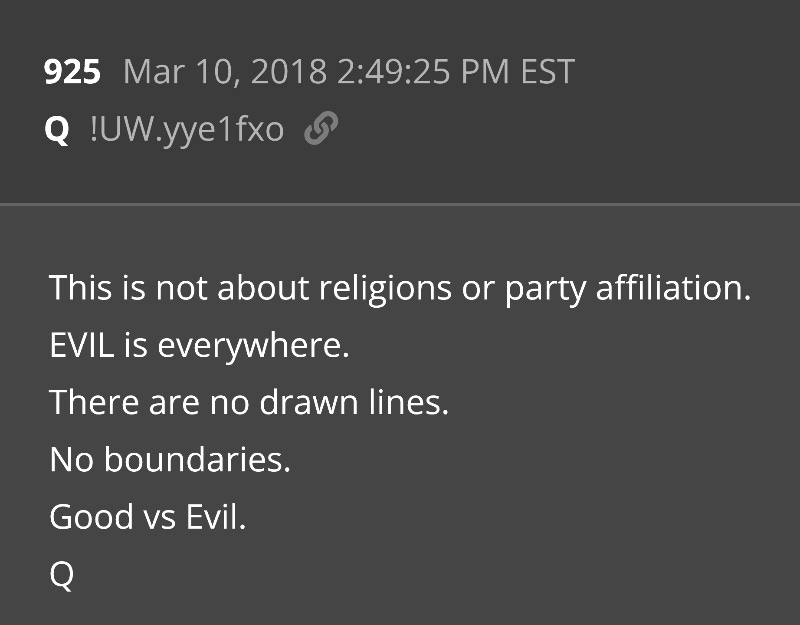
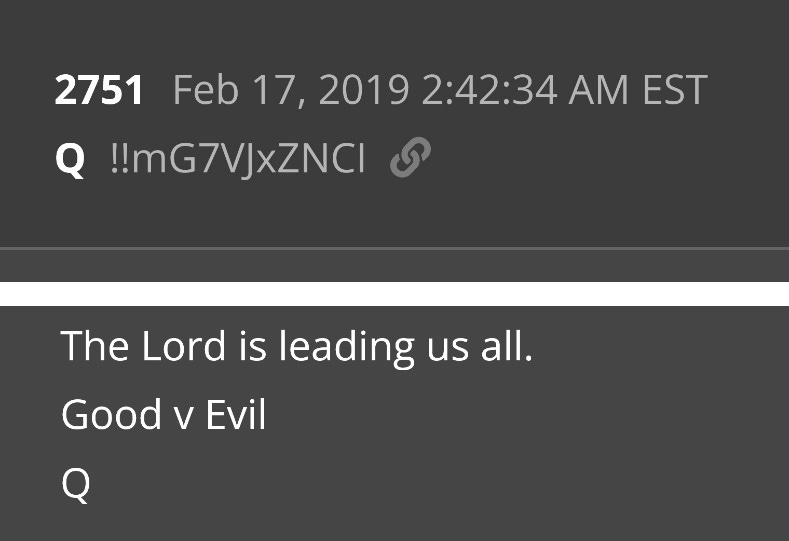
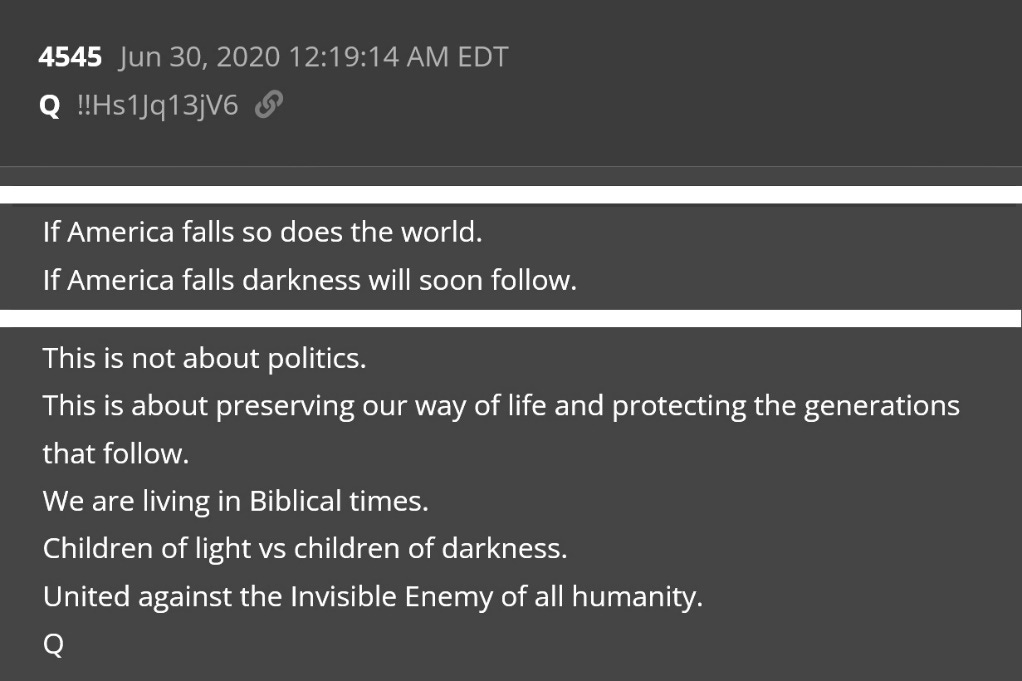
From the point of view of mass culture, cinema has replaced literature as the main vector of entertainment; vocabulary is impoverished and words tend to detach themselves from their original meaning. This is why the terms “Armageddon” and “Apocalypse” are increasingly used outside of any biblical context to designate, out of ignorance, the extinction of our civilization, most often associated with a nuclear catastrophe. Logically, our era has no choice but to come to terms with its founding fears.
Q, aware of the considerable impact of images on our perception, has been able to exploit the culture of our time to optimize his communication with the hermetic sophistication for which Q is known: among the cinematographic references present in his publications, the film entitled The Sum of All Fears stands out and is particularly relevant for grasping the nature of the danger that looms on the horizon.
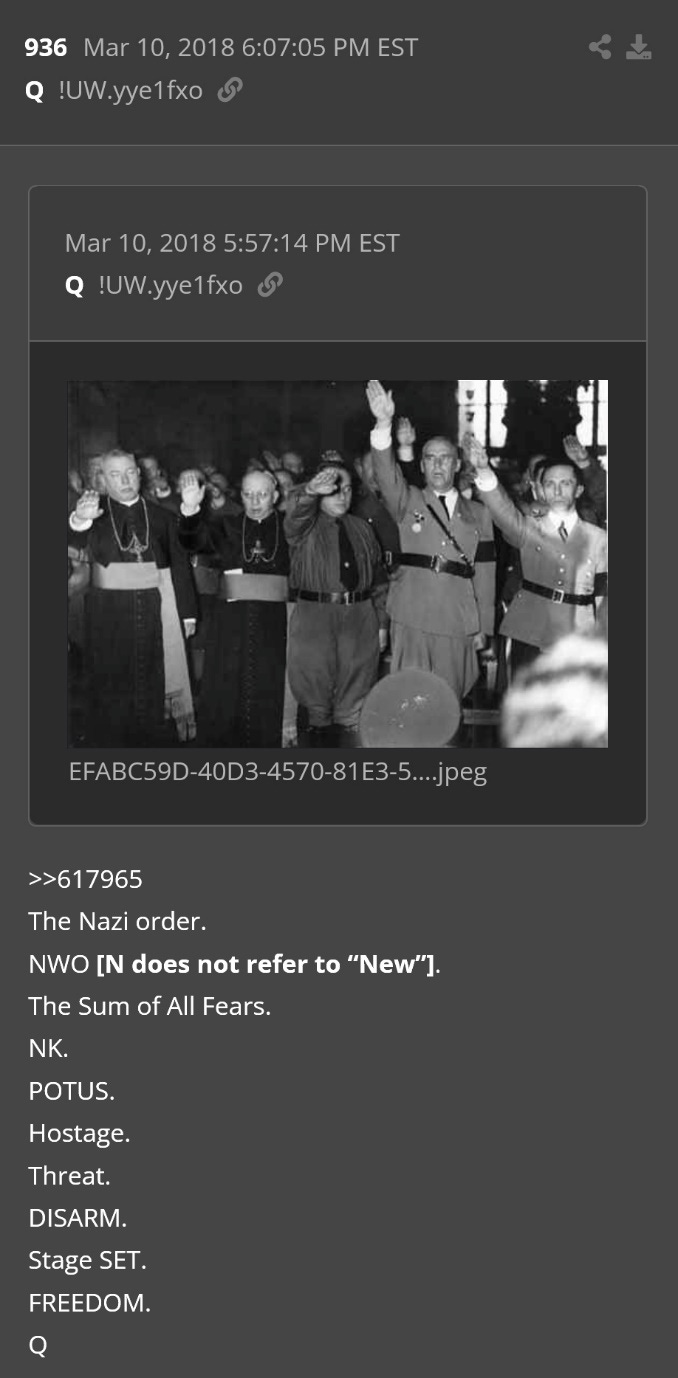

In order to respect Q’s method, according to which information finds optimal validation when it is discovered by oneself, I strongly recommend that you watch this film (https://odysee.com/@mygreatawakening:0/2002---The-Sum-of-All-fears-(2002):9). Discovering its history, its symbolism and its implications is an excellent introduction to the rest of this article.
In the meantime, you should know that Donald J. Trump gives yet another resonance to Q’s publications – validating them at the same time – when he makes a point of playing the music of the final scene of The Sum of All Fears (“Nessum Dorma” from Giacomo Puccini’s opera Turandot) at the close of his political rallies.
As nothing is ever left to chance in the communication of the President of the United States, the analogy with this film opens up interesting perspectives for reflection on the message it seeks to convey. Will we see, as the excerpt suggests, the signing of an agreement between Russia and the United States for the dismantling of their respective nuclear arsenals? No one can read a crystal ball, but this possibility deserves to be considered with the utmost seriousness.
Before we get to that, I fear that a catalytic event, following the Hegelian dialectic of “thesis, antithesis, synthesis” (often summarized by the triptych “problem, reaction, solution”), will unfortunately be necessary, as a last resort, for the transnational oligarchy to try to stay in power. A false flag attack, blamed on Russia, could be used as a pretext to start a full-scale global conflict.
I would not be surprised if the era of globalism, born, lived and prospered thanks to the fear of nuclear weapons, does not close in precisely this way.
In any case, it is certain that the nuclear issue is not foreign to the members and sympathizers of the #QAnon movement; our mysterious informant has given us the privilege of following the mysteries of the secret war that Donald J. Trump has been waging against nuclear weapons since his accession to power in 2016. We will see in the following articles that his first election was crucial to snatch the fate of humanity from the clutches of the apocalyptic project that the hyperclass wanted to finalize during the presidency of Hillary Clinton. We will thus measure the seriousness of the disaster that we narrowly avoided.
As the scenario of nuclear Armageddon will, I hope, remain the prerogative of science fiction authors, I see only one end in the interpretation of the slogan “it will be biblical”, prophesied by Q: he who has lived by the Book will perish by the Book.
Armageddon does not herald the end of time, but the end of an era: the end of an era, that of globalism, during which a tiny ‘elite’ will have tried to enslave humanity.
Ludovic Nicolas
Revealing Curiosities:
The word “Hebrew” or its derived forms appears only about 37 times in the Old Testament.
In a complete Bible (Old and New Testament), the word “Canaan” appears about 150 times and the word “Egypt” about 750 times...
Share the testimony of your awakening experience : my-great-awakening.com
My website : ludovicnicolas.com
All my links : linktr.ee/ludovic_nicolas
My essay : The Q Operation - The Testimony of a Digital Soldier
Maker a donation : ludovicnicolas.com/donation-universal